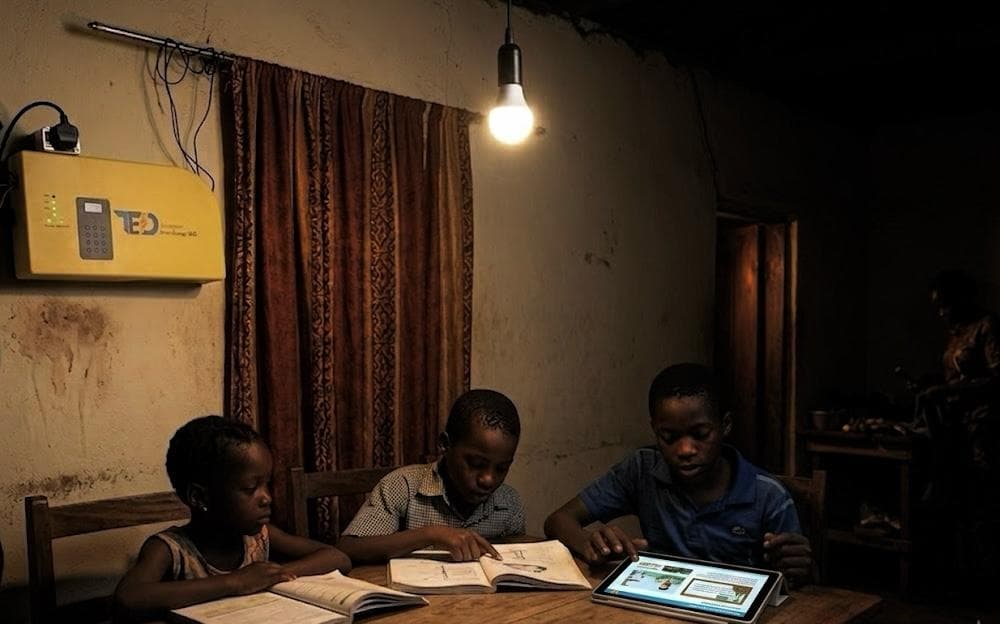
Low-income homes
Electricity for everyday life
Reliable power for lighting, phone charging, learning, communication and household comfort.
Less dependence on kerosene and generators
TED Evergreen
Decentralized energy, artificial intelligence and digital infrastructure.
OUR IMPACT
Energy access becomes meaningful when a business can stay open, a family spends less on fuel, a child can study at night, or a health facility can keep essential services running.
BEYOND THE CONNECTION
Installing an energy system is not the impact. The impact is what happens afterwards.
We look at how electricity affects income, operating hours, household expenses, healthcare delivery, learning, communication and the ability of people to participate in the digital economy.
2,700+
Distributed energy systems represented across our growing operating network.
200+
Rural communities and deployment clusters represented across active areas.
3
Homes, micro-businesses and essential community facilities.
24/7
Electricity designed to remain useful beyond daylight and generator availability.
VOICES FROM THE COMMUNITY
Our users experience energy access in practical ways: less money spent on fuel, longer productive hours, better lighting and more reliable access to the services they depend on.
Watch a testimony from one of the communities reached through our decentralized energy work.
WHAT ENERGY CHANGES
01
Electricity becomes available closer to the people who need it.
02
Homes and businesses can reduce reliance on petrol generators and kerosene.
03
Activities that previously ended with power outages can continue.
04
Energy supports business, learning, healthcare, communication and digital access.
ENERGY IN REAL LIFE
The value of energy depends on what the person connected to it needs to accomplish.
Low-income homes
Reliable power for lighting, phone charging, learning, communication and household comfort.
Less dependence on kerosene and generators
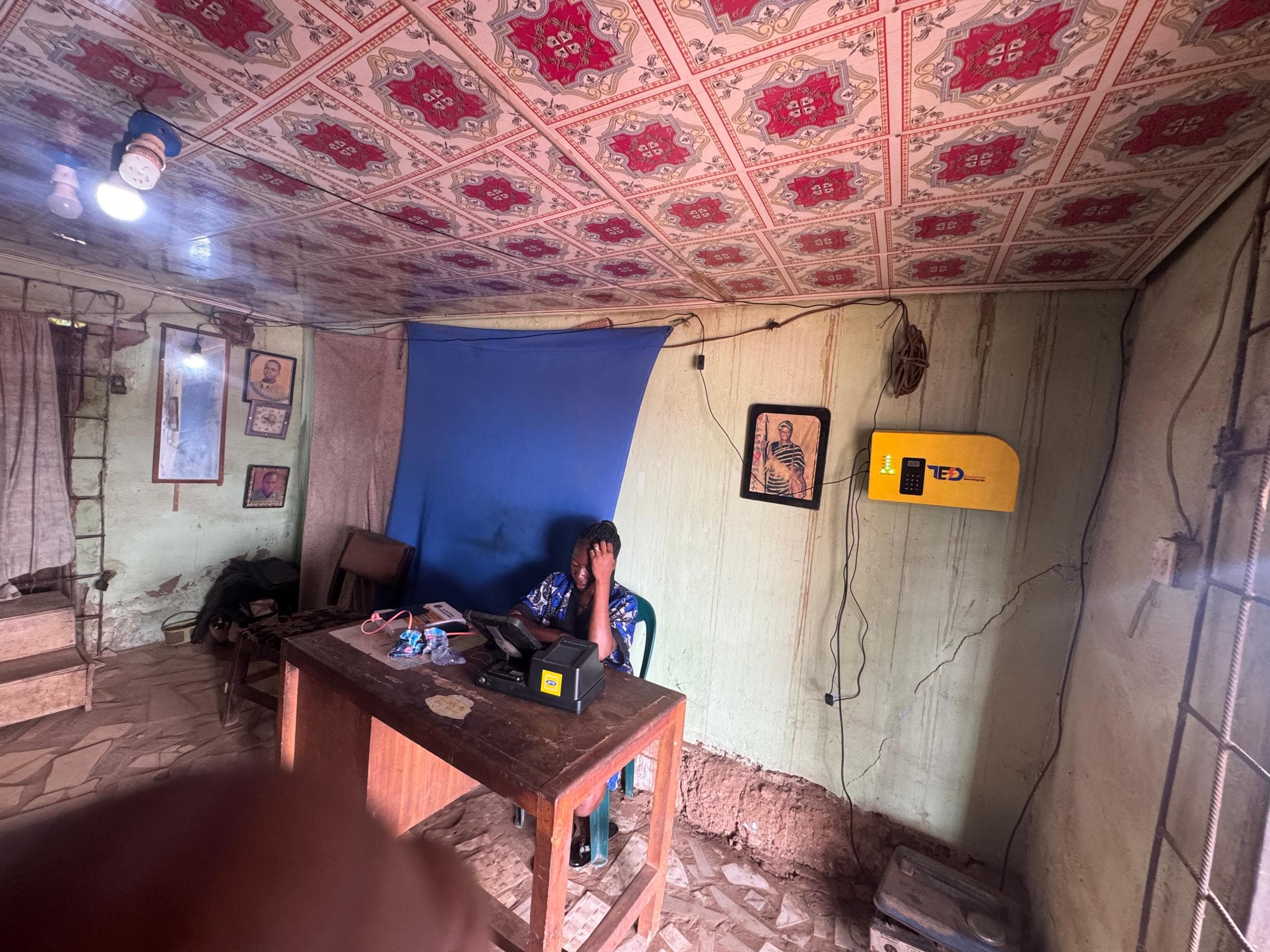
Micro-businesses
Energy for tools, lighting, refrigeration, charging and other productive activities that generate income.
More productive operating hours
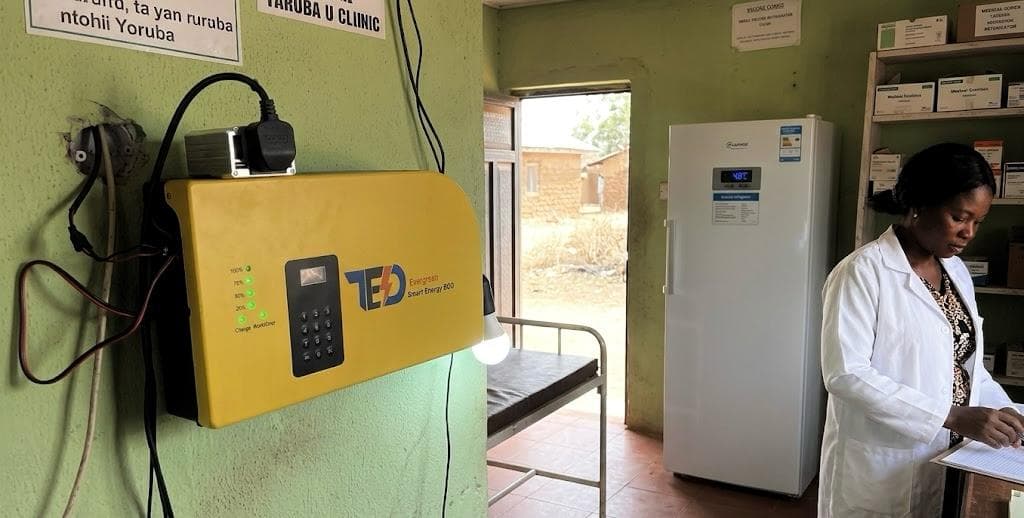
Healthcare
Reliable energy for lighting, communications, refrigeration and healthcare activities.
More reliable service after dark
PRODUCTIVE ENERGY
For a small business, unreliable energy directly affects revenue. Equipment sits idle, customers leave and money is spent buying fuel instead of growing the business.
Decentralized electricity can turn those lost hours into productive time.
Longer hours
Businesses can continue operating beyond outages.
Lower fuel cost
Less recurring spending on petrol.
More equipment use
Tools can remain productive for longer periods.
Digital opportunity
Power supports phones, payments and connected services.
HOUSEHOLD IMPACT
Electricity can support activities that are easy to take for granted where reliable grids exist: charging a phone, reading at night, watching educational content, running a fan or simply moving safely around the home after dark.
Lighting after sunset
Phone charging and communication
Study and digital learning
Household entertainment
Reduced generator and kerosene use
ESSENTIAL SERVICES
A rural health facility may need electricity for lighting, vaccine refrigeration, communications, digital records and emergency care.
Reliable decentralized energy can keep these services available in places where conventional infrastructure cannot provide dependable electricity.
Night-time lighting
Vaccine and medicine refrigeration
Communication equipment
Emergency response
Digital health services
CLEANER ENERGY
Petrol and diesel generators do more than cost money. They produce noise, local air pollution and greenhouse-gas emissions close to the people using them.
Every hour that clean decentralized electricity replaces generator use can reduce fuel consumption and pollution at the point where people live and work.
Solar generation reduces the need to run petrol and diesel generators for everyday electricity.
Less generator use means reduced exhaust, noise and fuel handling around homes and businesses.
Recovering useful components extends material value and reduces unnecessary solar and battery waste.
CIRCULAR IMPACT
The growth of solar energy will also create growing volumes of batteries, electronics and other components that eventually reach the end of their first use.
Our circular approach focuses on recovering suitable components, testing them and returning safe usable value to the energy-access system where appropriate.
See How Our Circular Model Works →IMPACT INTELLIGENCE
Counting installations is useful, but it does not tell us whether a system is still working, whether the customer is saving money or whether electricity is creating meaningful economic value.
Digital monitoring allows us to move toward impact measurement based on system performance and actual energy use.
Understand whether deployed systems remain operational.
Understand how customers are actually using electricity.
Track the health of critical energy-storage assets.
Identify energy being used for income-generating activities.
Understand whether the energy service remains useful and affordable.
Understand faults, intervention needs and long-term asset performance.
FROM IMPACT TO INTELLIGENCE
Our Energy Intelligence platform brings distributed installations into one operating view, connecting location, customer, system and performance information.
Open Energy Intelligence →Live Energy Network
2,700+
Connected system network
OUR IMPACT APPROACH
01
Who gained access to reliable electricity and what type of user received the connection?
02
How does the user's electricity spending change after receiving the system?
03
Is the system still operating, and how frequently does it require maintenance?
04
Does electricity increase productive hours, enable new equipment or support business growth?
05
How does electricity affect learning, healthcare, communication and daily household life?
06
How much generator and kerosene use has been displaced, and what materials have been recovered or reused?
SCALE WHAT WORKS