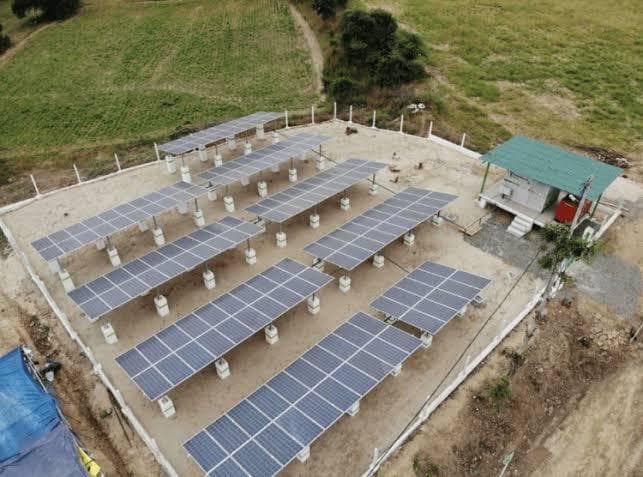
Solar energy has changed what is possible for rural electrification. But installing solar equipment is not the same thing as creating affordable and sustainable electricity access.
For decades, communities located far from electricity infrastructure often had little choice but to wait for the national grid or depend on petrol and diesel generators.
Solar changed that equation.
A household can now generate electricity on its own roof. A small business can install panels and batteries. A rural community can be served by a mini-grid without waiting for national transmission and distribution infrastructure to reach it.
These technologies have already made an enormous contribution to electricity access.
Nigeria's Electrification Project, for example, supported the deployment of more than one million solar home systems and numerous mini-grids, helping millions of people gain electricity access.
The lesson therefore is not that solar does not work.
Solar works. The harder question is whether the traditional way we finance, install and maintain solar can reach everyone who still needs electricity.
For millions of low-income households, micro-businesses and distributed rural communities, the challenge is increasingly not whether electricity can technically be produced.
The challenge is whether the system can be afforded, maintained, expanded and kept operational over many years.
The people still without electricity are often the hardest to serve
As electricity access expands, many of the communities that remain unelectrified are not necessarily the easiest places to reach.
Some are geographically isolated.
Others have widely dispersed households rather than dense settlements.
In many communities, household income is low or unpredictable.
Electricity consumption may initially be modest because families cannot afford large numbers of appliances.
Technical support may be several hours away.
Roads may be poor, making equipment transportation and maintenance more expensive.
This creates one of the central contradictions of rural electrification.
The people who most need affordable decentralized electricity can also be among the most expensive customers to reach using traditional energy models.
Traditional solar still begins with expensive hardware
A standalone solar system may appear relatively simple.
There is a solar panel or solar array.
There is battery storage.
There may be an inverter.
There is a charge controller or other power electronics.
There are cables, connectors, protection equipment, mounting structures and installation costs.
For a larger system, the equipment becomes more substantial.
Technically, this is far easier than extending kilometres of conventional electricity infrastructure to one household.
Financially, however, the customer still has to pay for several pieces of energy infrastructure before receiving the benefit of the electricity.
Solar can be inexpensive over its lifetime while still being expensive on the first day.
The upfront cost creates the first major barrier
Once solar equipment has been installed, sunlight itself does not need to be purchased every morning.
But panels, batteries, inverters and installation do need to be paid for.
This means several years of electricity infrastructure costs may be concentrated into the initial purchase.
For a middle-income household, purchasing solar may be considered an investment.
For a low-income rural household that already struggles with food, education, healthcare and transportation expenses, purchasing an entire electricity system can simply be impossible.
The technology therefore exists.
The customer needs it.
But the financing structure prevents the two from meeting.
PAYGo improved access, but it did not remove the cost
Pay-as-you-go solar was an important innovation because it reduced the requirement for customers to pay the entire system cost at once.
Instead of purchasing everything upfront, customers could make smaller payments over time.
This made solar accessible to many households that otherwise could not have purchased a system.
But financing changes when the customer pays.
It does not make the underlying equipment free.
The panel still has a cost.
The battery has a cost.
The electronics have a cost.
Distribution has a cost.
Installation has a cost.
Financing itself may also have a cost.
Customer acquisition, administration, collections and after-sales support all have costs as well.
Financing can change when a customer pays. It does not automatically change how much infrastructure ultimately has to be paid for.
For customers at the lowest end of the income spectrum, even a financed system can therefore remain difficult to afford.
A traditional solar system also asks customers to predict tomorrow's electricity needs today
Most standalone solar systems are sold according to a particular capacity.
The size of the solar panels, battery and inverter determines what the customer can power.
But electricity demand changes over time.
Imagine a small shop that initially needs electricity for lighting, phone charging and a fan.
A modest solar system may serve these needs perfectly.
Two years later, the owner may want to add a refrigerator.
Later, the business may need a television, freezer, additional lighting or other productive equipment.
Suddenly, the system purchased a few years earlier is no longer enough.
The customer may need additional panels.
A larger battery.
A different inverter.
New wiring.
In some cases, substantial parts of the original system may need to be redesigned.
A system that solved yesterday's energy poverty can become a limitation on tomorrow's economic growth.
This matters because successful electricity access should encourage people to consume more useful energy over time.
A shop should be able to grow.
A family should be able to add appliances as its income grows.
A clinic should be able to add equipment.
A farmer should be able to move from lighting into processing, cooling or irrigation.
Energy infrastructure should support that growth rather than force customers to start again every time demand changes.
The solar panel may last for years, but the system is more than its panel
Solar panels often receive most of the attention when people discuss solar energy.
But the reliability of an off-grid solar system depends on several components working together.
Battery storage is particularly important.
Electricity is often needed in the evening, early morning and during periods when solar generation is lower.
Batteries make that possible.
But batteries degrade over time.
How quickly that happens depends on factors such as battery chemistry, temperature, charging patterns, depth of discharge, quality of the equipment and how the system is used.
Other components also age.
Inverters can fail.
Charge controllers can develop problems.
Connectors can corrode.
Cables can deteriorate or become damaged.
Protection devices may need replacement.
Electronic monitoring systems can develop faults.
This means a solar system that works perfectly when it is installed cannot simply be assumed to continue working indefinitely without maintenance.
Installing an energy system is a one-time event. Providing reliable electricity is a long-term responsibility.
The real question appears five or ten years after installation
Imagine a solar system installed in a rural school, health facility, household or small business.
On the day it is commissioned, everything works.
The batteries are new.
The inverter works.
The panels generate electricity.
The lights come on.
The project is celebrated.
But what happens several years later?
What happens when the battery has lost a large portion of its usable capacity?
What happens when an inverter fails?
What happens when the customer's electricity demand is now twice what it was when the project was installed?
Who pays for replacement equipment?
Who diagnoses the fault?
Who travels to the community?
Who knows which replacement component is compatible with the system?
Who is still responsible for the installation after the original project team or donor has moved on?
These are not minor details.
They determine whether the original electricity investment continues to deliver electricity years later.
The success of a solar project should not be measured only when the lights first come on. It should also be measured years later when those lights still come on.
Solar panels on a roof do not automatically mean sustainable energy access
Electricity projects are often easiest to measure at the point of installation.
A system can be counted.
A connection can be recorded.
Installed capacity can be measured.
Beneficiaries can be photographed.
But long-term maintenance is less visible.
There is rarely a launch event when a battery is replaced five years later.
There is no ribbon-cutting ceremony when a technician diagnoses a damaged inverter.
Yet these activities are what determine whether the investment continues producing impact.
This means the energy-access sector needs to move beyond an installation mindset.
What communities ultimately need is not ownership of solar equipment.
What they need is reliable electricity.
Mini-grids solve part of the problem, but they introduce another level of infrastructure
When individual household solar systems are too small for the electricity needs of an entire community, mini-grids can provide a much more capable solution.
A mini-grid generates electricity centrally and distributes it to several customers through a local network.
This allows the system to support larger electricity loads.
It can serve homes.
Businesses.
Schools.
Clinics.
Agricultural processing.
Refrigeration.
Workshops.
And other productive activities.
But this capability requires considerably more infrastructure.
A mini-grid is more than panels and batteries
A solar mini-grid may require a large solar array.
Battery storage.
Inverters and power electronics.
Land.
Civil works.
Distribution poles.
Distribution cables.
Customer connections.
Smart or conventional meters.
Electrical protection equipment.
Monitoring systems.
Security infrastructure.
Installation teams.
Engineering design.
Logistics.
And ongoing operations and maintenance.
A mini-grid may avoid waiting for the national grid, but it still requires building a small electricity network.
High setup costs create a difficult economic problem
All this infrastructure requires significant capital before the first customer consumes electricity.
The project developer must find a way to recover that investment over time.
But the customers being served may be among the lowest-income electricity consumers in the country.
This creates a difficult balance.
If tariffs are too high, electricity becomes unaffordable for the people the project was built to serve.
If tariffs are too low, the operator may not earn enough revenue to maintain equipment, replace components and keep the mini-grid financially sustainable.
This is one reason grants, subsidies and other forms of public or development finance have been important to many rural mini-grid programmes.
World Bank documentation for Nigeria's Electrification Project identified this affordability problem, showing why capital support was needed to make many mini-grid projects commercially viable while keeping electricity tariffs within reach of rural customers.
The technology can work perfectly while the economics remain difficult.
Low electricity consumption can make the economics even harder
A mini-grid operator has already spent money building the infrastructure.
But many low-income households initially consume relatively small amounts of electricity.
They may use a few lights, charge phones, run a fan and perhaps watch television.
This is socially valuable electricity.
But a mini-grid also needs sufficient electricity sales to support its operating and maintenance costs.
If electricity consumption is very low, large infrastructure costs have to be recovered across a relatively small volume of electricity sold.
This is one reason productive-use customers are so important to mini-grid economics.
Cold rooms consume electricity.
Agricultural processing consumes electricity.
Welding workshops consume electricity.
Irrigation systems consume electricity.
Clinics, businesses and other productive facilities can create stronger demand.
That demand can improve utilisation of the infrastructure.
Rural electrification works best when electricity does more than power lights. It needs to help create economic activity too.
A mini-grid's maintenance burden does not disappear after construction
A mini-grid may be decentralized, but it is still an electricity network.
Batteries eventually require attention or replacement.
Inverters need maintenance.
Distribution lines need inspection.
Meters can fail.
Connections need to be repaired.
Vegetation may interfere with distribution infrastructure.
Security has to be maintained.
Customers need technical support.
Payments need to be collected.
Monitoring systems need to remain operational.
Technicians need to respond when faults occur.
And eventually major components must be replaced.
Building a mini-grid is an engineering project. Keeping one working for many years is an engineering, financial and operational system.
The five-to-ten-year challenge is where sustainability becomes visible
A mini-grid can perform extremely well during its early years.
But eventually the system enters a different phase.
Batteries may have degraded and require replacement depending on their chemistry, design and operating conditions.
Some electronic equipment may need replacement.
Demand may have grown beyond the size anticipated when the mini-grid was designed.
Additional generation may be needed.
Distribution infrastructure may need repairs or expansion.
Imported equipment may now cost significantly more because of inflation or exchange-rate changes.
The grant or donor funding used during construction may no longer be available.
At that point, the long-term operating model is tested.
Has enough revenue been collected to pay for replacement?
Was replacement cost built into the tariff?
Does the operator still have technical staff available?
Are compatible parts still available?
Has the community's demand changed completely?
If these questions were not considered from the beginning, a project that once looked successful can begin providing increasingly unreliable electricity.
The question is not whether a mini-grid can operate for more than ten years. A well-run one can. The question is whether its financial and maintenance model was designed to keep it operating for that long.
This is not an argument against solar or mini-grids
Solar home systems and mini-grids remain essential technologies for rural electrification.
They are already providing electricity to communities that might otherwise wait years for conventional grid infrastructure.
The argument is not that these technologies should be abandoned.
The argument is that their delivery models must continue to evolve.
If the objective is universal electricity access, the sector must reach people who cannot afford the conventional upfront cost.
It must serve businesses whose electricity demand changes as they grow.
It must maintain systems located far from service centres.
And it must create a realistic plan for replacing batteries, inverters and other equipment years after installation.
We may need to separate ownership of equipment from access to electricity
One assumption behind many traditional solar models is that the customer needs to own the equipment.
But that is not how most infrastructure services work.
A mobile phone user does not own the telecommunications tower.
A household connected to a conventional electricity utility does not purchase the generating station, transformer and distribution poles.
The customer pays for a service.
Decentralized energy can increasingly move in this direction.
Instead of asking whether a low-income family can afford to purchase an entire solar system, the question becomes:
How can we provide the amount of reliable electricity this household needs at a price it can afford?
That changes how the problem is designed.
Energy systems need to become more modular and adaptable
Not every customer has the same electricity need.
A low-income household may need lights, phone charging, a fan and a television.
A micro-business may need significantly more energy.
A health facility has different requirements again.
An agricultural business may need high-power productive equipment.
Those demands can also change.
Instead of forcing every customer into a fixed system that becomes difficult to expand later, decentralized energy infrastructure can increasingly become modular.
Customers can begin at a capacity appropriate to their current needs.
Capacity can grow as demand grows.
Components can be monitored.
Maintenance can be planned.
Systems can evolve with the people using them.
Digital technology can reduce the cost of operating distributed energy systems
Decentralization creates another challenge.
The customers may be spread across many different communities.
Imagine serving 10,000 energy users spread across hundreds of locations.
Without digital infrastructure, every problem can require human intervention.
Is the battery healthy?
Is the system overloaded?
Is there a payment problem?
Has the inverter failed?
Does a technician need to visit?
Has the customer's electricity demand increased?
If every answer requires a physical visit, distributed energy becomes expensive to operate.
Digital systems can change this.
Remote monitoring can provide visibility into system performance.
Digital payments can reduce collection costs.
Customer information can be centralized.
Technicians can receive diagnostic information before travelling.
Usage data can show how electricity demand is changing.
The more distributed the energy infrastructure becomes, the more important digital infrastructure becomes.
AI can help manage the complexity of thousands of distributed systems
Artificial intelligence does not replace energy hardware.
Its value is in helping organizations make better decisions across large numbers of distributed customers and assets.
AI-assisted systems can help analyse customer demand.
They can support system-sizing decisions.
They can identify unusual consumption patterns.
They can help flag systems that may require maintenance.
They can support demand forecasting.
They can help identify which customers may need additional energy capacity.
And they can reduce repetitive administrative work.
The objective is not to add artificial intelligence simply because it is fashionable.
The objective is to reduce the cost and complexity of delivering electricity to distributed customers.
The energy sector also needs to think about what happens to equipment afterwards
As solar deployment increases, another challenge will grow alongside it.
Eventually more solar panels, batteries, electronics and other components will reach the end of their first useful life.
Some equipment will need to be responsibly recycled.
Some components may still contain recoverable materials.
Some components may retain useful technical capacity for appropriate second-life applications after proper testing and safety assessment.
A circular approach asks whether value can be recovered before equipment becomes waste.
Done correctly, this can help address two problems at once.
The growing environmental challenge created by discarded energy equipment.
And the high cost of energy hardware that keeps many low-income users from accessing electricity.
The future of rural energy needs more than one technology
The national grid will remain important.
Mini-grids will remain important.
Standalone solar will remain important.
But the future of universal energy access may depend increasingly on combining different approaches.
Smaller decentralized systems where individual systems make sense.
Mini-grids where community-scale infrastructure is economically and technically appropriate.
Energy-as-a-Service where ownership costs create barriers.
Digital monitoring where customers are geographically distributed.
Artificial intelligence where large amounts of customer and system data need to be understood.
Circularity where energy equipment contains recoverable value.
And most importantly, models that think about the entire life of the energy system rather than just the day it is installed.
The question is no longer whether we can install more solar
We already know that we can.
The harder question is whether the systems being installed today will still be delivering useful and affordable electricity years from now.
Will the battery be replaced?
Will the inverter be maintained?
Can the customer afford the service?
Can the system grow when the business grows?
Can technicians diagnose problems without unnecessary travel?
Can the operator generate enough revenue to maintain the infrastructure?
Can useful materials be recovered responsibly when equipment reaches the end of its first life?
And can the model reach families and businesses that could never afford to purchase an entire electricity system upfront?
These questions will determine whether decentralized renewable energy truly reaches the last mile.
Solar technology has already changed what is possible.
Now the delivery model has to change too.
The future of energy access is not simply putting more solar panels in communities. It is building energy systems that remain affordable, adaptable and reliable long after the installation team has gone home.
SOURCES & FURTHER READING
Data and references
World Bank — Expanding Nigeria's Mini Grid Market
World Bank reporting on Nigeria's mini-grid market, electricity-access gap and experience under the Nigeria Electrification Project.
World Bank — Nigeria Electrification Project
Project documentation covering rural electrification, mini-grid economics, affordability, capital expenditure and the use of grants.
World Bank — Sustainable Energy for Schools and Health Centers
Discussion of long-term operation and maintenance challenges affecting off-grid solar installations.
World Bank — Nigeria DARES
Information on Nigeria's Distributed Access through Renewable Energy Scale-up programme.
World Bank — Mini Grids for Half a Billion People
Research and analysis on mini-grid economics, productive use of electricity and the role of mini-grids in universal energy access.
NEXT INSIGHT
Why decentralized energy needs AI, digital infrastructure and a different operating model.
The next article explores how smaller distributed systems, Energy-as-a-Service, remote monitoring, artificial intelligence and circular energy can address some of the limitations of conventional approaches.
Read Next Article →