Electricity poverty is often described as an infrastructure problem. In reality, it is much more than that.
When electricity is unavailable or unreliable, people do not simply sit in darkness. Families look for alternatives. Businesses buy generators. Health centres improvise. Students charge phones wherever they can. Shop owners increase prices to recover fuel costs. Families spend money on energy that could otherwise pay for food, education, healthcare or investment.
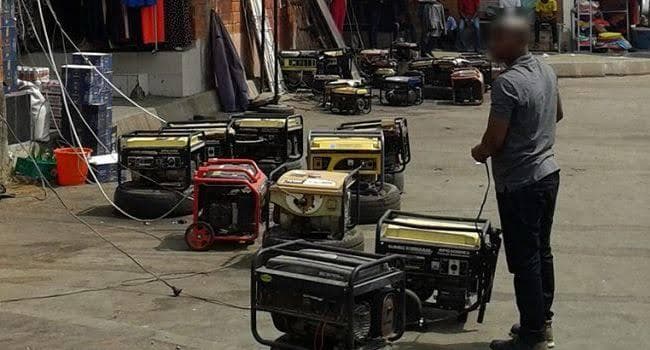
Across Nigeria, petrol and diesel generators have become one of the most visible responses to unreliable electricity. Their sound is familiar in homes, markets, workshops, offices, hospitals and small businesses.
Generators are not a real substitute for reliable electricity. They are an expensive coping mechanism.
And the cost is paid in many ways: in fuel, in lost income, in polluted air, in health risks, in noise and in greenhouse-gas emissions.
Nigeria's electricity challenge therefore cannot be measured only by how many people are connected to the grid. We must also ask a harder question: what are people forced to do when reliable electricity is not available?
That question reveals the true cost of the electricity crisis.
More than 80 million Nigerians still lack electricity access
Nigeria remains one of the countries with the largest electricity access deficits in the world. World Bank reporting has continued to place the number of Nigerians without electricity access at more than 80 million people.
Even this number does not fully capture the problem, because millions of people who are technically connected to electricity networks still experience supply that is intermittent, insufficient or unreliable.
This creates two overlapping forms of energy poverty. Some communities have no meaningful electricity access at all. Others have poles, transformers and electricity lines around them but cannot depend on electricity being available when they need it.
For both groups, daily life becomes an exercise in finding substitutes.
The generator became Nigeria's unofficial power system
Generators became widespread because they solve an immediate problem. If electricity disappears during business hours, the owner of a shop cannot simply wait for national reforms. If a clinic is treating a patient, health workers cannot stop because the grid is unavailable.
Petrol and diesel generators therefore provide something extremely valuable: control. A household, business or institution can switch them on whenever electricity disappears.
But that control comes at a high price.
Generator use is not limited to large companies. Small petrol generators are common in homes and micro-businesses. Large diesel generators support hotels, hospitals, factories, schools and offices.
In many communities, several businesses located beside one another operate separate engines at the same time. One generator powers the barber. Another powers the provision shop. Another powers the pharmacy. Another powers the restaurant.
Instead of a reliable electricity network serving the entire area, dozens or hundreds of small combustion engines may operate independently.
That is an extraordinarily expensive way to power an economy.
The first cost is financial
When grid electricity is unreliable, businesses frequently pay twice. They pay for electricity when it is available and then pay again for petrol or diesel when it is not.
Generator expenses include much more than fuel. There is the initial cost of purchasing the machine, engine oil, maintenance, repairs, replacement parts, transportation to purchase fuel and eventually the cost of replacing the generator itself.
For a large company, these costs may reduce profit. For a micro-business operating on very narrow margins, they can determine whether the business survives.
Imagine a small rural business
Consider a barber who needs electricity for clippers, lighting, phone charging and perhaps a fan. Without dependable electricity, he purchases a small petrol generator.
Every working day now begins with another calculation. How much petrol is available? How many customers must he serve before the fuel cost is recovered? Can he afford to keep the generator running when there are no customers? Should he increase the price of a haircut?
The same calculation affects tailors, welders, food sellers, phone-charging businesses, pharmacies, cold-drink sellers, grain processors, cybercafés, hairdressers, restaurants, mechanics and artisans.
Energy stops being a predictable operating cost and becomes a daily uncertainty.
That uncertainty changes how businesses make decisions.
A business owner may decide not to purchase additional equipment because powering it will be too expensive. A refrigerator that could increase sales becomes unattractive if running it requires continuous generator fuel.
A business that could employ another worker may use that money for energy instead.
This is one of the ways poor electricity quietly suppresses economic growth. Not through one dramatic event, but through thousands of small decisions made every day.
Electricity poverty reduces household income too
Businesses are not the only ones paying to compensate for unreliable electricity.
Families purchase generator fuel. They pay people to charge phones. They buy rechargeable lamps and replacement batteries. They repair appliances damaged by unstable voltage. Some travel to neighbouring communities simply to access electricity-dependent services.
Every naira spent coping with electricity poverty is money that cannot be spent somewhere else.
For a wealthier household, that may be an inconvenience. For a low-income family, it can create a serious trade-off.
Fuel competes with food. Energy competes with school fees. Generator repairs compete with healthcare. Phone charging competes with transport.
This is one of the ways energy poverty and income poverty reinforce each other.
Generator costs eventually reach everyone
When the cost of operating a business rises, that cost eventually appears in the price of goods and services.
A cold-drink seller has to recover refrigeration and generator fuel. A barber includes electricity costs in the price of a haircut. A bakery passes energy costs into the price of bread.
A welder increases charges because running equipment costs more. A restaurant pays more to refrigerate food. A small manufacturer includes generator fuel in production costs.
This means generator dependence affects people who do not personally own generators.
Consumers pay part of the cost indirectly through higher prices.
The health cost is less visible but potentially more serious
Petrol and diesel generators burn fossil fuels. The combustion process produces pollutants including particulate matter, carbon monoxide and nitrogen oxides.
The health concern becomes more serious because generators are often operated very close to the people who use them.
A generator may sit behind a shop, beside a bedroom window, inside a market, outside a restaurant, near a classroom, behind a health facility or inside a residential compound.
Emissions are therefore produced close to the people who breathe them.
Fine particles and polluted air
Fine particulate matter is particularly dangerous because the particles are small enough to travel deep into the lungs. Long-term exposure to polluted air is associated with respiratory and cardiovascular health risks.
The problem becomes larger when many generators operate in the same neighbourhood or commercial area.
One small generator may appear insignificant. Ten running in one street are different. Hundreds operating across a market create a much larger pollution burden.
Carbon monoxide creates an immediate danger
Carbon monoxide is particularly dangerous because it is colourless and odourless. A person can inhale it without realising that the air around them has become unsafe.
It is produced when fuels such as petrol and diesel do not burn completely.
Exposure can cause headaches, dizziness, weakness, nausea, confusion and loss of consciousness. At high concentrations, carbon monoxide exposure can be fatal.
The danger increases when generators are operated inside enclosed or poorly ventilated spaces or positioned too close to doors and windows.
A machine purchased to bring electricity into a home should not become a threat to the people it was meant to serve.
Children are especially vulnerable to polluted environments
Children can be especially vulnerable to polluted air because their bodies and lungs are still developing and they breathe more air relative to their body size than adults.
In communities where generators operate close to homes, children may spend years exposed to exhaust they never chose to breathe.
A child may gain electric light for studying at night while simultaneously being exposed to generator noise and fumes.
That is not a sustainable definition of electricity access.
Generator noise is another form of pollution
Exhaust is only one part of the problem.
Anyone who has lived in a neighbourhood where several generators operate simultaneously knows how quickly the sound becomes part of the environment.
Small generators may run for several hours. Larger diesel generators may operate through the night. In commercial areas, one engine starts as another stops.
Noise affects sleep, concentration, communication and quality of life.
A student may be trying to read beside several running generators. A patient may be recovering in a health facility beside a diesel engine. A family may close its windows to block noise and fumes, reducing ventilation inside the house.
Electricity should improve quality of life. It should not require communities to accept constant noise and polluted air as the price of having power.
Health facilities face an impossible trade-off
The electricity crisis becomes particularly serious in healthcare.
A clinic needs power whether or not the national grid is available. Lights are needed for treatment at night. Vaccines and some medicines require refrigeration. Laboratory equipment needs electricity.
Phones and communications equipment need charging. Water may need to be pumped. Medical devices may depend on continuous electricity.
When reliable electricity is unavailable, a health facility may have little choice but to operate a generator.
The facility then faces another problem: every additional hour of electricity requires additional fuel.
For a facility with limited resources, administrators may have to decide when the generator should run and when it should remain off.
This means electricity availability can become directly connected to the facility's ability to purchase fuel.
Students pay a different kind of price
Electricity poverty also affects education in ways that are not always visible in school statistics.
A student may attend classes during the day and return home to a completely different learning environment.
When night arrives, there may be no reliable light. Phone batteries must be conserved. A laptop may become unusable. Internet access may exist through a mobile network, yet the device required to access it cannot remain charged.
Teachers face similar challenges. Preparing digital materials, printing documents, participating in online training and using computers all require electricity.
Modern education is increasingly digital, and digital participation begins with energy.
Poor electricity access deepens the digital divide
Nigeria's economy is becoming increasingly digital.
People apply for jobs online. Students register for examinations online. Entrepreneurs advertise products through social media. Farmers access market information on smartphones. People use mobile banking and digital payment systems.
Remote work depends on laptops and internet connectivity. Artificial intelligence is opening new ways to learn, work and build businesses.
But every one of those opportunities depends on electricity.
A community can have mobile network coverage and still face digital exclusion if residents cannot reliably charge devices.
A young person may own a smartphone but still be unable to use it consistently for learning because electricity is scarce.
There can be no meaningful digital inclusion without energy inclusion.
Agriculture also loses money when electricity is unreliable
Rural electricity problems are particularly important in agricultural communities.
Agriculture does not end when crops leave the farm. Produce may need to be dried, processed, milled, refrigerated, frozen, packaged or stored.
Many of these activities require electricity.
Without dependable electricity, communities may sell agricultural products in raw form even when local processing could significantly increase their value.
Perishable products create an even greater challenge. Fish can spoil. Vegetables deteriorate. Milk requires cooling. Meat requires refrigeration.
Without affordable cold storage, farmers and traders have less time to sell their products.
That weakens their bargaining position. If a farmer knows produce will spoil soon, accepting a low price may be better than losing everything.
Electricity affects not only how much farmers produce, but how much value they are able to retain from what they produce.
Then there is the climate cost
Every petrol or diesel generator burns fossil fuel.
That combustion releases carbon dioxide and other pollutants.
Across one household, the emissions may appear small. Across thousands or millions of homes and businesses running generators for hours every day, the emissions accumulate.
This creates a development contradiction.
Communities need electricity to improve living standards and economic productivity, yet if that electricity is supplied primarily through millions of inefficient fossil-fuel generators, meeting today's development needs contributes to tomorrow's environmental and climate risks.
Nigeria and other countries in Sub-Saharan Africa already face significant vulnerability to extreme heat, changing rainfall, flooding and other climate-related pressures.
Energy poverty should therefore not be solved in a way that locks communities into another long-term problem.
Fuel transportation creates another hidden footprint
Generators do not only consume fuel. Fuel has to reach them.
Petrol and diesel must be refined or imported, transported, stored, distributed to filling stations, purchased, placed into containers and carried to homes or businesses.
For communities far from fuel stations, this creates another cost.
People may travel several kilometres simply to purchase petrol. During shortages, businesses can stop operating even when their generators are perfectly functional.
Price changes immediately increase energy costs.
The energy system therefore becomes vulnerable not only to electricity failure but also to fuel availability.
Generator dependency can trap small businesses
Perhaps one of the most damaging effects is what happens over time.
A small business earns money. Part of that money buys fuel. Another portion repairs the generator.
The business owner cannot afford larger, more productive equipment because energy costs are already high.
Production stays small. Income stays low. The business therefore cannot afford a better energy system and continues purchasing fuel.
The cycle repeats.
The generator can keep a business alive while simultaneously making it harder for that business to grow.
This is an important distinction. A coping technology is not necessarily a development technology.
Women can carry a disproportionate economic burden
Many small businesses in communities are operated by women.
Food preparation, cold drinks, hairdressing, tailoring, retail businesses and small processing activities may all depend on electricity.
When electricity requires daily fuel purchases, those costs directly reduce business income.
A woman running a home-based enterprise may also operate a generator close to where children live and play, meaning the economic and health consequences can overlap.
The real cost of unreliable electricity is larger than the electricity bill
When we calculate the cost of electricity poverty, we often count only the most obvious spending.
How much does a household pay for electricity? How much fuel does a business purchase?
But the real cost includes much more.
It includes income that was never earned because a business could not operate, food that spoiled because refrigeration failed, hours spent searching for fuel, schoolwork that could not be completed, medical equipment that could not operate continuously, generator repairs, polluted air inhaled over years, noise exposure, missed digital opportunities, delayed business expansion and greenhouse-gas emissions.
These costs rarely appear together on one invoice. That is exactly why the electricity crisis can be underestimated.
Reliable electricity is not a luxury
It is tempting to talk about electricity as if it were simply about convenience.
It is not.
Reliable electricity is economic infrastructure. It is health infrastructure. It is education infrastructure. It is agricultural infrastructure. And increasingly, it is digital infrastructure.
Electricity sits underneath almost every modern service.
This is why electricity inequality eventually becomes opportunity inequality.
A business with dependable electricity begins each day ready to produce. A business without it begins the day asking whether petrol is available.
A student with dependable electricity opens a laptop. Another looks for somewhere to charge a phone.
A clinic with reliable electricity focuses on treating patients. Another must first make sure the generator has fuel.
Nigeria cannot normalize generator dependence
Generators filled an important gap. They became a practical response to electricity infrastructure that could not consistently meet demand.
For many households and businesses, they remain necessary today.
The point is not to blame people for using them. People are responding rationally to an unreliable electricity system.
The problem begins when an emergency response becomes permanent infrastructure.
A country cannot sustainably power millions of homes, hospitals, farms, schools and businesses through separate petrol and diesel engines indefinitely.
The financial cost is too high. The health cost is too high. The environmental cost is too high. The climate cost is too high. And the opportunity cost is too high.
The most important question is what electricity makes possible
The goal should not simply be to remove generators.
The deeper goal is to remove the reason people need them.
A family does not purchase petrol because it wants emissions. A barber does not enjoy spending part of every day's income on generator fuel. A health facility does not want medical services operating beside a diesel engine. A student does not prefer studying with generator noise.
People use these systems because electricity is necessary.
That should change how we think about electricity access.
The issue should not simply be:
How many people have an electricity connection?
The deeper questions are whether families can afford to use electricity, whether businesses can depend on it, whether health facilities can operate around the clock and whether students can participate in the digital economy.
We should ask whether farmers can preserve and process what they produce, whether communities can access electricity without compromising their health and whether economic development can happen without increasing dependence on fossil fuels.
Darkness has a price
When electricity fails, the cost does not disappear.
It moves somewhere else.
It moves into the price of petrol. Into the operating expenses of a small business. Into polluted air. Into a patient's healthcare experience. Into a child's study time. Into food that spoils. Into higher prices. Into carbon emissions. And into business opportunities that never happen.
Electricity poverty is therefore not simply the absence of electrical current.
It is the presence of many other costs.
Nigeria needs reliable electricity not simply because people deserve brighter homes. It needs reliable electricity because millions of people are already paying for its absence.
They are paying financially. They are paying economically. They are paying through their health. And the environment is paying with them.
The real question is no longer whether unreliable electricity is expensive. It is how much longer communities should be expected to keep paying the price.
SOURCES & FURTHER READING
Data and references
World Bank — Expanding Nigeria's Mini Grid Market
World Bank reporting on Nigeria's electricity-access deficit and distributed-energy market.
World Bank — Nigeria to Expand Access to Clean Energy for 17.5 Million People
Information on Nigeria's Distributed Access through Renewable Energy Scale-up programme, including generator displacement.
World Health Organization — Air Pollution
WHO information on the health consequences associated with air pollution.
WHO — Types of Pollutants
Information on particulate matter, carbon monoxide, nitrogen dioxide and other major air pollutants.
World Health Organization — Energy and Health
WHO resources on the relationship between energy access, health and development.
International Finance Corporation — The Dirty Footprint of the Broken Grid
Research examining the economic and environmental consequences of fossil-fuel backup generators.
NEXT INSIGHT
Why traditional solar systems still leave many low-income communities behind.
Our next article looks at upfront costs, PAYGo, fixed system sizing, battery replacement, maintenance and why conventional solar models can still struggle to reach low-income and distributed communities.
Read Next Article →